
FROM PEAT TO TOURISM (1)
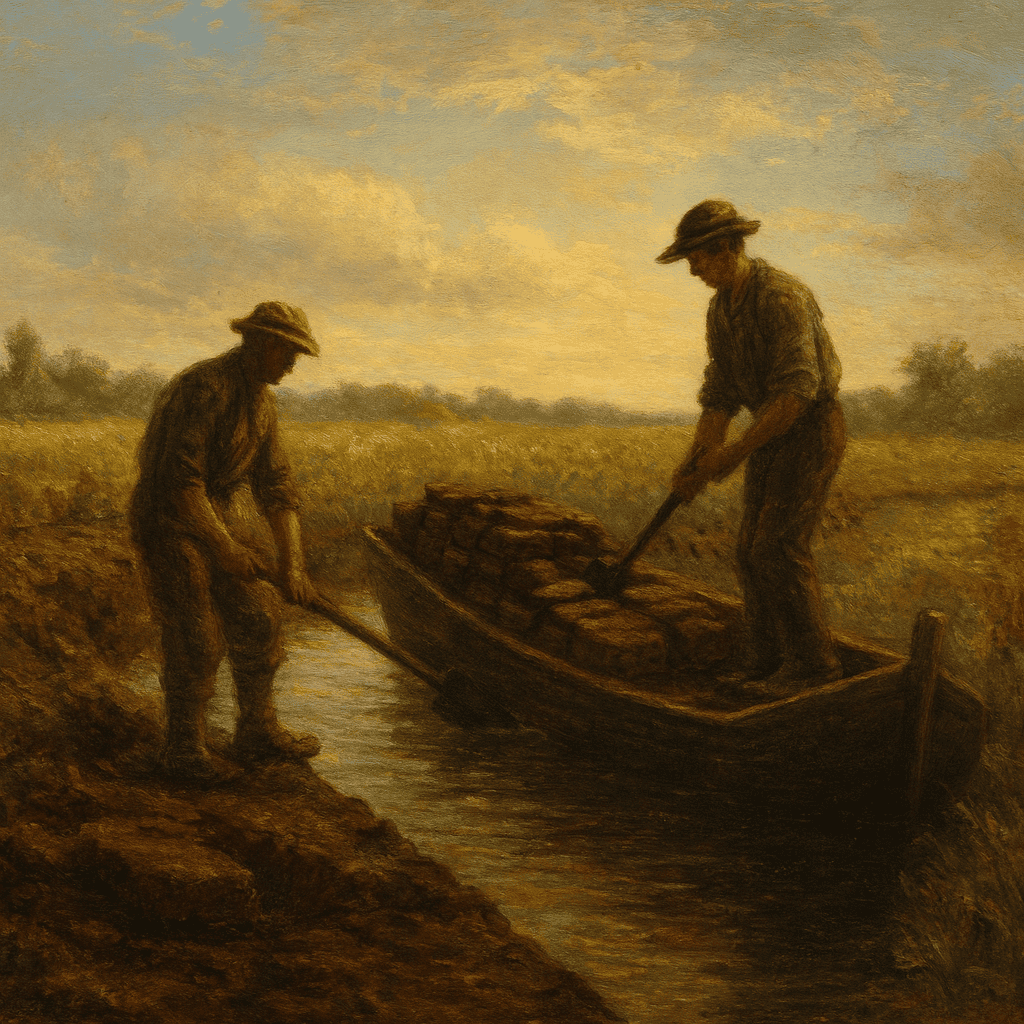
GIETHOORN – Anyone cruising through the village canal of Giethoorn today experiences peace, charm and beauty – but beneath those calm waters lies a story of hard work. Here, people once dug peat, kept livestock and cut reeds. Barges full of peat, cows and hay set the rhythm of village life for centuries. Locals transported their loads in wooden punters, rafts and larger bokken, manually pushed through the water.
From wood to peat
Even before the 17th century, peat was extracted on a small scale. The shift from wood to peat as fuel began around 1499, when a ban on tree felling was introduced – marking the start of large-scale peat digging.
Extraction in Giethoorn began on the eastern shore of the Giethoorn Lake – a natural lake in the “Kop van Overijssel” region – and was carried out enthusiastically. Sometimes too enthusiastically: too little land was left behind. Wind and storms washed it away, creating pools and lakes known as the wieden. Thus, the well-known Bovenwijde was formed.
The Golden Age of peat
During the 17th century, peat extraction became a major enterprise. As an energy source, peat was one of the pillars of Dutch prosperity during the Golden Age. Peat from Giethoorn was transported via Blokzijl and the Zuiderzee to Amsterdam.
So much land was dug away and so many waterways were created for transport that many houses ended up on small islands. Later, these “house islets” were connected by wooden footbridges and high arched bridges. Peat cutting remained the foundation of the village for centuries – literally. Agriculture played only a minor role during this commercial peat-digging era.
New techniques from “the Gietersen”
By the late 18th century, peat digging in Giethoorn had begun to fade. Many diggers moved to other peat areas, such as southern Friesland, where they continued their craft. There, the “Gietersen” (peat workers from Giethoorn, Kalenberg and Wanneperveen) introduced a new method: using a baggerbeugel (dredging tool) to scoop peat from below the groundwater level and place it in boxes to mix and dry elsewhere.
Changing times
In Giethoorn itself, the canals – once designed for peat transport – found new use in farming. Boats remained essential to reach the fields east of the Bovenwijde. The high wooden bridges had to allow passage for heavily loaded bokken filled with hay or cattle. During the 18th and 19th centuries, new sources of income emerged: reed and dulen cutting, fishing, running taverns, hunting and even poaching.
Gradually, artists, writers and travelers discovered the village.
Then came the tourists – and Giethoorn evolved from a village of labour and survival into one of peace and experience: the water village now known all over the world.
0 reacties